4 Types of Anxiety—and How Yoga Can Help Ease Them All
Mandy Leman | OCT 11, 2024

“I’m just an anxious person.”
Sound familiar? Sometimes, it’s when life becomes more routine and structured that we begin to notice the anxiety that’s been lingering underneath. Despite having everything in order—whether it’s a settled job, home, or relationship—persistent feelings of anxiety can still show up. This is because anxiety often isn’t about external chaos but rather how our nervous system has been conditioned over time. Even when life feels calm, old patterns of stress can keep us feeling uneasy. This was my experience. I was confused when everything seemed in place, but I was still “an anxious person." It wasn’t until I turned to yoga that I found a path toward real inner peace.
TL; DR
In a rush? Here's what we're covering:
- Anxiety can persist even when life is perfectly organized, because it’s often stress stored in the nervous system, not just a reaction to external chaos.
- There are 4 types of anxiety—mental, emotional, physical, and spiritual—each with different symptoms, from racing thoughts to feeling disconnected from your purpose.
- Yoga helps ease anxiety by encouraging presence, regulating the nervous system, and addressing the interconnectedness of physical, mental, emotional, and spiritual well-being.
“So, Why Do I Feel More Anxious Than Others?”
Anxiety is more than just a fleeting feeling—it's often the result of stored survival stress. This stress is often linked to our sympathetic nervous system, the part responsible for the “fight or flight” response. There are two main causes:
- A single, significant stressor, such as a traumatic event.
- A deeper, core-level dysregulation of the autonomic nervous system (ANS), often built over years.
While anxiety is universal, the way it shows up in each person is incredibly unique. You might feel tense and restless, while someone else may feel dull or even disconnected. Below, we’ll explore four common types of anxiety.
4 Types of Anxiety
- Mental Anxiety: This is the kind of anxiety that comes with an overactive, racing mind. Thoughts may fixate on future scenarios, replaying events or conversations, or obsessively planning. It leaves you feeling “tired and wired”—exhausted yet unable to slow down.
- Emotional Anxiety: This form of anxiety often makes you feel unsafe, overwhelmed, and easily triggered. Emotional anxiety stirs up confusion and agitation, you might feel multiple conflicting feelings at once, often leading to hypersensitivity or emotional shutdowns.
- Physical Anxiety: Physical symptoms of anxiety include tension in your muscles, shallow breathing, a racing heart, or difficulty sitting still. Your body remains in a state of agitation, unable to fully relax.
- Spiritual Anxiety: This manifests as a longing for deeper meaning or purpose in life. It’s often driven by existential questions and a feeling of disconnection from your inner purpose.
Long-term dysregulation of your nervous system, whether from a job you hate or persistent overwhelm from life’s pressures like raising a family, can have profound effects on your health—mentally, emotionally, physically, and spiritually.
How Yoga Helps Ease Anxiety
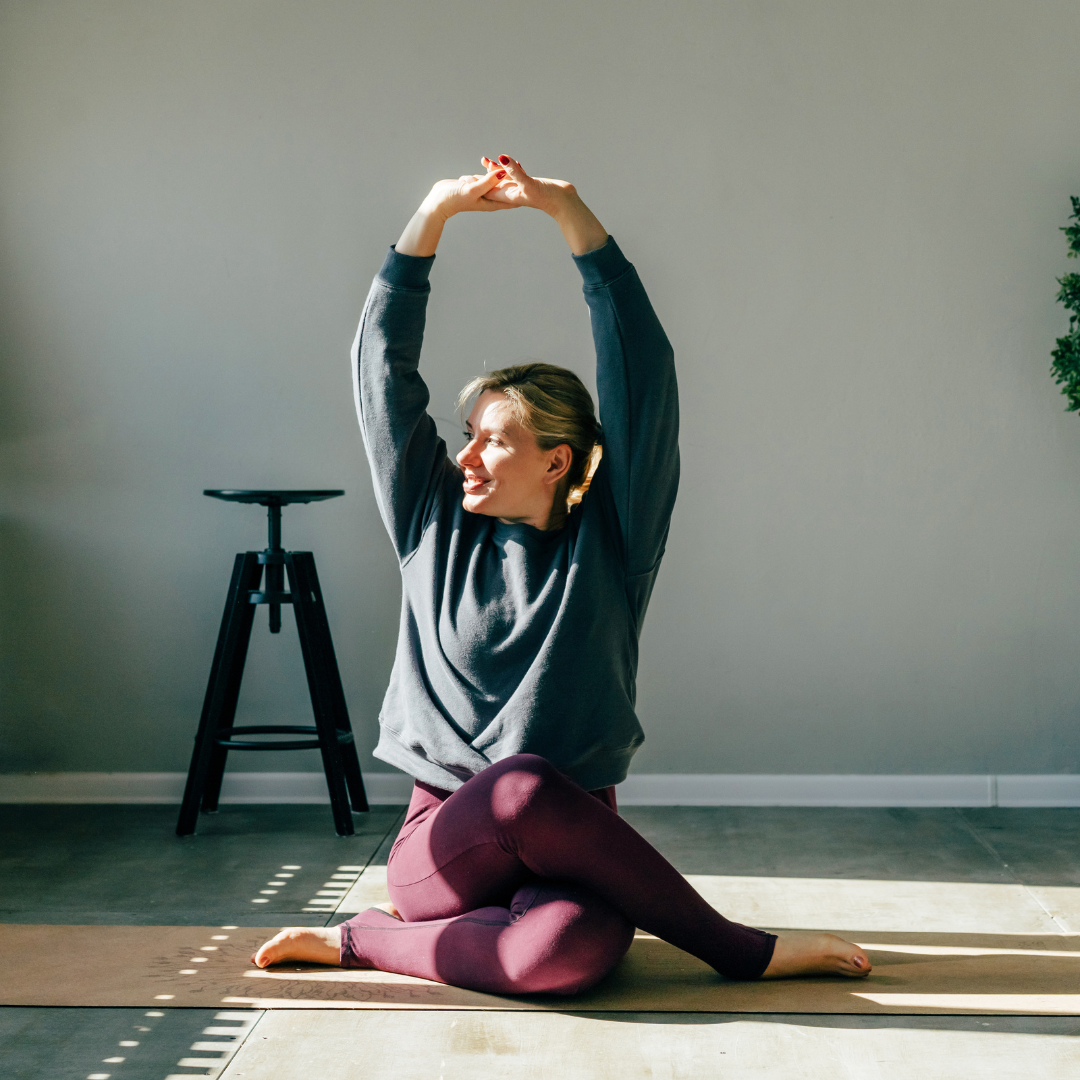
From a yogic perspective, our physical, mental, emotional, and spiritual health are deeply interconnected. Any imbalance or “dis-ease” in one area inevitably affects the others.
A yoga practice brings us back to the present moment, cultivating an awareness of our thoughts, feelings, and physical sensations without judgment. Through yoga, we learn to reset our nervous system, releasing stored tension and stress. As you practice, you begin to regulate your breath, release tightness from your body, and calm your mind—each breath a step closer to balance and ease.
Yoga doesn’t just alleviate anxiety; it also helps retrain your nervous system to become more resilient, empowering you to handle stressors with more grace and less reactivity. By consistently practicing yoga, you begin to restore the balance across all areas of your life—physically, emotionally, mentally, and spiritually.
Final Thoughts
Anxiety isn’t something to be “fixed” and healing won’t happen overnight. But through yoga, you can create space for healing, gently unraveling the knots of stress stored within. If you’re feeling stuck in anxiety, yoga might be the key to finding the peace and balance you’ve been searching for.
Step onto the mat, and let’s breathe through it together.
If you’re ready to start exploring the connection between yoga and anxiety relief, check out How Yoga Works for Healing, a free guide and practice series to start feeling better now.
Next week, I'm going over how the way you breathe shapes your nervous system and the way you feel, and what you can do about it.
Mandy Leman | OCT 11, 2024
Share this blog post